
Epic Systems Deploys 150+ AI Features to Combat Clinician Burnout: Ambient AI Scribes Save 2 Hours of Documentation Daily, VA Rolls Out Nationwide
Introduction: The Clinician Burnout Crisis and AI's Response
Clinician burnout is a severe challenge facing healthcare systems worldwide. Research shows that physicians spend more than half their working day on electronic health record (EHR) documentation rather than direct patient care. This problem has been particularly acute since the COVID-19 pandemic, leading to mass clinician departures and exacerbating global healthcare workforce shortages.
In 2026, Epic Systems, the world's largest EHR vendor, is directly addressing this challenge by launching over 150 AI features designed to automate documentation and administrative tasks, allowing clinicians to invest more time and energy in what truly matters — patient care.
Epic AI's Core Tools: Three Flagship Features
1. Art: Ambient AI Scribe
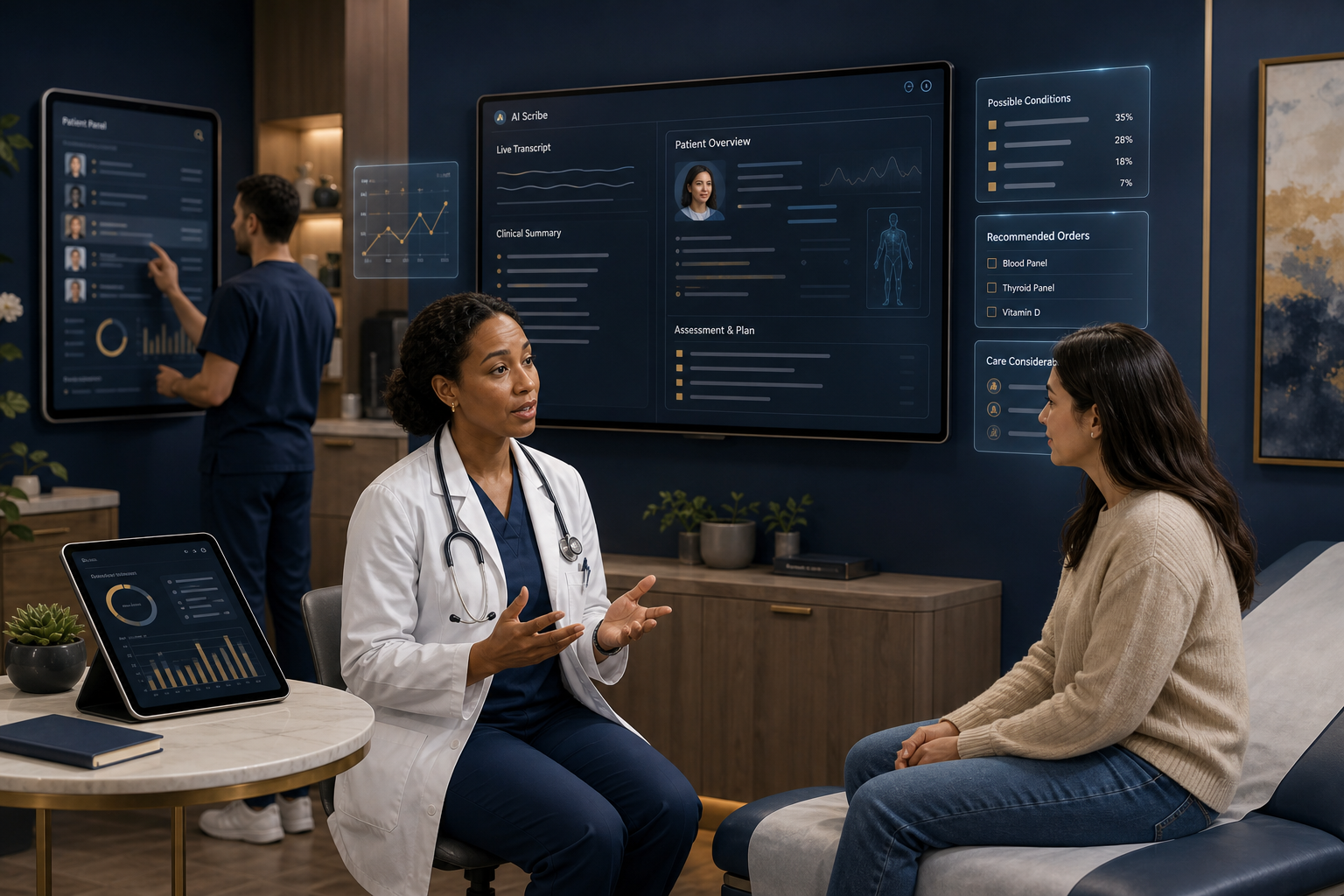
Art is Epic's ambient AI scribe and its most closely watched AI feature. Art listens in real-time during patient-provider encounters to automatically draft clinical notes, summaries, and orders for provider review and confirmation.
Data from early adopter health systems shows that Art can save clinicians 1 to 2 hours of documentation work daily. While this may seem modest, for a physician working 10-12 hours per day, it means seeing 8 to 12 more patients or no longer needing to complete documentation after hours (what clinicians call "pajama time").
2. Emmie: Patient Engagement AI Chatbot
Emmie is an AI chatbot integrated into MyChart (Epic's patient portal) that answers patient health questions, provides disease information, and suggests screenings.
A key function of Emmie is drafting replies to patient messages for physician review before sending. This addresses the physician inbox overload problem — research shows patient message volume has increased by over 300% in recent years, becoming a significant contributor to clinician burnout.
3. Penny: Revenue Cycle and Operations AI
Penny focuses on revenue cycle and operational tasks, including medical coding assistance and drafting denial appeal letters. Revenue cycle management in healthcare is a highly complex and time-consuming process; Penny's automation capabilities can significantly improve efficiency and reduce human error.
Quantified Impact: The Data Speaks
Documentation Time
Ambient AI scribe technology (including Art and third-party tools) has been proven to significantly reduce documentation time:
- Early adopter health systems report significantly reduced documentation time
- Clinician well-being improved by approximately 30%
- Some health systems report physicians completing documentation during clinic hours without needing to continue at home
Operational Efficiency
The Parkview Health case is particularly noteworthy: by using Epic's AI operational tools, the health system achieved a 75% reduction in provider schedule build time, dramatically improving human resource management efficiency.
Patient Care
By reducing documentation burden, clinicians can:
- Focus more on patients during consultation time
- Reduce medical errors caused by fatigue
- Improve patient satisfaction scores
U.S. Department of Veterans Affairs: The Largest Government AI Deployment
The U.S. Department of Veterans Affairs (VA) is executing one of the largest government-led AI deployments globally: rolling out ambient scribe technology to all VA medical centers nationwide.
The VA operates over 170 medical centers and more than 1,000 outpatient clinics, serving over 9 million veterans. This large-scale deployment will not only benefit millions of patients but also provide valuable real-world data on ambient AI scribe technology in large healthcare systems.
Market Landscape: The Rise of Native EHR AI Integration
Epic's AI strategy represents an important trend in the healthcare AI market: the shift from third-party "bolt-on" tools to native EHR integration.
Competitive Landscape
In the ambient AI scribe market, Epic faces competition from several specialized vendors:
- Abridge: AI scribe focused on clinical documentation
- Suki: Recently completed $90 million Series E funding to build open AI ecosystems
- Nuance DAX: Microsoft's ambient clinical documentation tool
Epic's Competitive Advantages
Epic's native integration strategy has several clear advantages:
- Single-vendor contract: Health systems don't need to manage multiple vendor relationships
- Simplified support: Technical issues handled by a single vendor
- Seamless data flow: AI features directly access EHR data without third-party middleware
- Cost efficiency: Some features (like athenahealth's athenaAmbient) are provided at no additional cost
Market Challenges
However, industry observers note that some specialized practices may still prefer third-party tools that offer greater customization or niche optimizations for specific medical fields.
Governance and Safety: From "Hype" to "Evidence"
In 2026, the healthcare AI industry has entered a maturity phase where technical performance is no longer the sole metric for success. Competition is now defined by the ability to:
- Demonstrate real-world clinical value
- Ensure workflow compatibility
- Maintain safety standards
Public Trust Challenges
Notably, despite rapid AI adoption rates, public trust faces challenges. The latest surveys show that American openness to AI in healthcare dropped to 42% in 2026, as patients and providers develop a more nuanced, cautious perspective — viewing AI as an "augmented intelligence" partner rather than a replacement for human judgment.
Regulatory Frameworks
Regulators are adopting increasingly "risk-based" frameworks. For example, Utah's "AI Learning Lab" is testing a staged regulatory model allowing AI-generated prescriptions under physician oversight, with the potential for increased autonomy as safety thresholds are met.
Asia-Pacific Perspective: Localization Challenges for Healthcare AI
For healthcare institutions in the Asia-Pacific region, Epic's AI strategy provides important reference points, but also faces localization challenges:
Language Diversity
The Asia-Pacific region has diverse languages; ambient AI scribes need to support Cantonese, Mandarin, Japanese, Korean, and other languages, as well as local medical terminology and cultural practices.
Regulatory Differences
Different countries and regions have varying regulatory requirements for healthcare AI, from Hong Kong's Medical Devices Ordinance to Japan's Pharmaceutical and Medical Device Act. Healthcare AI vendors need to make compliance adjustments for different markets.
Infrastructure Differences
Healthcare IT maturity varies significantly across Asia-Pacific countries. Some regions may need to first complete basic EHR system construction before effectively deploying AI features.
Conclusion: The New Normal for Healthcare AI
Epic Systems' deployment of 150+ AI features in 2026 represents an important transition of healthcare AI from experimental tools to core infrastructure. Ambient AI scribes saving 1-2 hours of documentation daily, 30% improvement in clinician well-being, and the VA's nationwide rollout — these figures collectively paint a picture of healthcare AI creating real value.
For healthcare institutions in the Asia-Pacific region, Epic's case provides valuable reference: success of AI in healthcare depends not only on technical capabilities, but also on workflow integration, clinical validation, and clinician trust.