APAIIF 亞太人工智能產業總會APAIIFAI Knowledge

AI in Healthcare

Discover AI applications and innovations in healthcare

64 articles

Aidoc AI Radiology Foundation Model: 2,000 Hospitals, 60 Million Annual Cases, FDA Clearance for 14 CT Triage Conditions, Radiology AI Enters Scale Era

Aidoc AI Radiology Foundation Model: 2,000 Hospitals, 60 Million Annual Cases, FDA Clearance for 14 CT Triage Conditions, Radiology AI Enters Scale Era

Aidoc's AI radiology platform covers nearly 2,000 hospitals processing 60 million annual cases, receiving FDA clearance in January 2026 for a foundation model CT triage solution covering 14 clinical conditions. Radiology AI accounts for 76% of all FDA AI medical device clearances as the industry enters a new era of scaled deployment.

Nov 2, 202611
AI Ambient Scribe Clinical Evidence: 2.3 Million Encounters Show 31% Physician Burnout Reduction, 2x ROI in 14 Months

AI Ambient Scribe Clinical Evidence: 2.3 Million Encounters Show 31% Physician Burnout Reduction, 2x ROI in 14 Months

Multiple large-scale 2026 clinical studies confirm AI ambient scribe benefits: 2.3 million encounter data shows physician burnout dropping from 51.9% to 38.8% (31% reduction), 13-16 minutes saved per shift, 87-89% semantic accuracy, and 2x+ ROI within 14 months, though research notes time savings are often reinvested into patient interaction rather than reduced work hours.

Nov 1, 202613
Stanford SIMCO AI Framework Breakthrough: Aspirin-Lansoprazole Combination 15× More Effective Than Aspirin Alone for Preterm Birth Prevention, Now in Clinical Trial

Stanford SIMCO AI Framework Breakthrough: Aspirin-Lansoprazole Combination 15× More Effective Than Aspirin Alone for Preterm Birth Prevention, Now in Clinical Trial

Stanford's SIMCO AI framework, simulating 218 million immune cells, discovered that the aspirin-lansoprazole (SALPZ) combination is 15× more effective than aspirin alone at preventing preterm birth, with a median 17.3-day labor delay and 87.3% responder rate. FDA has authorized a 670-patient clinical trial.

Oct 31, 20269
Microsoft MAI-DxO Emergency Diagnosis AI: 80.3% Accuracy Surpasses Physicians' 46.8%, Science Paper Reveals Chain-of-Debate Architecture

Microsoft MAI-DxO Emergency Diagnosis AI: 80.3% Accuracy Surpasses Physicians' 46.8%, Science Paper Reveals Chain-of-Debate Architecture

Microsoft MAI-DxO multi-agent AI diagnostic system published in Science achieved 80.3% accuracy in emergency department simulations—1.7x the 46.8% physician average. Its innovative 'chain-of-debate' architecture has multiple specialist AI agents iteratively debate before diagnosing. Budget-constrained configuration costs $2,634 per case, below the ~$3,400 physician average.

Oct 30, 202610
ARPA-H ADVOCATE Program: $62.7M to Build World's First FDA-Authorized Heart Failure AI Agent, Stanford University Leads Supervisory Layer Development

ARPA-H ADVOCATE Program: $62.7M to Build World's First FDA-Authorized Heart Failure AI Agent, Stanford University Leads Supervisory Layer Development

ARPA-H announced the ADVOCATE program in September 2026, committing $62.7M to develop the world's first FDA-authorized patient-facing AI agent for heart failure care. Atman Health, Tempus AI, and Updoc lead patient interaction, Stanford University develops a disease-agnostic supervisory AI agent, and Duke University with Kaiser Permanente handle large-scale deployment across rural and diverse clinical settings, targeting FDA authorization submission within 24 months.

Oct 29, 202612
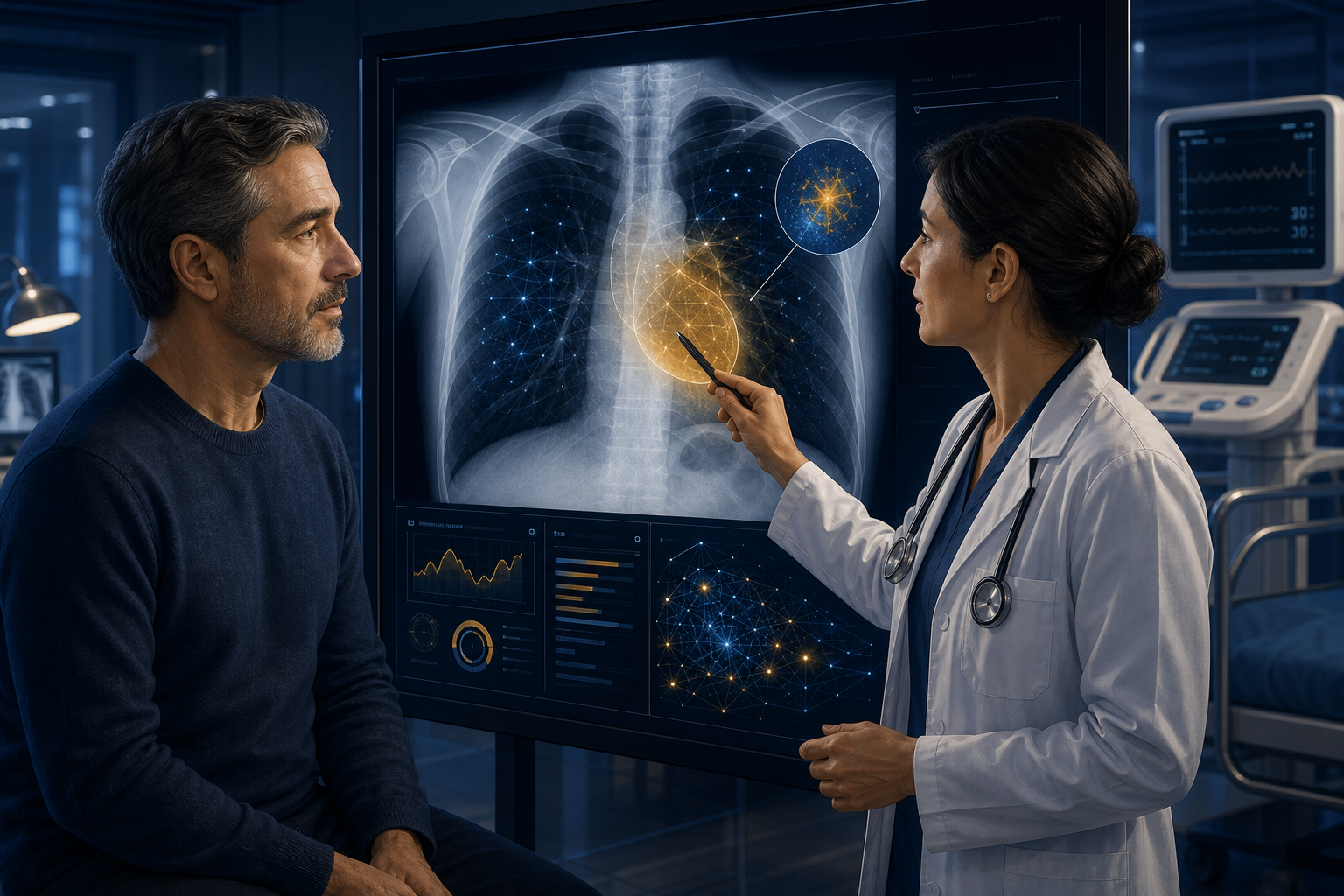
AI Deep Learning Detects Silent Heart Failure in Chest X-Rays, Cutting Unnecessary Echo Scans by 85%

AI Deep Learning Detects Silent Heart Failure in Chest X-Rays, Cutting Unnecessary Echo Scans by 85%

AI deep learning models can now detect asymptomatic heart failure from standard chest X-rays. In studies of 32,000+ X-ray-echo pairs, models achieve AUC 0.86-0.97, reduce unnecessary echocardiograms by up to 85%, and outperform radiologists with 71% sensitivity — critical for resource-limited APAC rural healthcare.

Oct 28, 202610
AI Ambient Scribe Large-Scale Study: 2.3 Million Clinical Encounters Confirm 31% Physician Burnout Reduction, 16 Minutes Saved Per Shift on Documentation

AI Ambient Scribe Large-Scale Study: 2.3 Million Clinical Encounters Confirm 31% Physician Burnout Reduction, 16 Minutes Saved Per Shift on Documentation

Multiple large-scale 2026 studies confirm AI ambient scribe clinical value: JAMA research shows physician burnout dropped from 51.9% to 38.8% (31% reduction), NEJM AI research shows 16 minutes saved per shift on documentation, and Spain's 2.3 million encounter study shows efficiency gains reinvested into deeper patient interaction. 68% of health systems deployed, achieving 2x ROI in 14 months.

Oct 27, 202612
First Human Receives AI-Designed Virus Treatment: Radical Numerics Omnii-1 Phage Therapy Targets Antibiotic-Resistant Bacteria Under FDA Compassionate Use

First Human Receives AI-Designed Virus Treatment: Radical Numerics Omnii-1 Phage Therapy Targets Antibiotic-Resistant Bacteria Under FDA Compassionate Use

On October 20, 2026, Radical Numerics' Omnii-1 AI-designed bacteriophage cocktail therapy was administered to a human for the first time to treat antibiotic-resistant bacterial infection. FDA approved compassionate use; in vitro testing successfully eliminated the patient's bacterial isolate, pioneering a new era of AI-designed biological therapy.

Oct 26, 202610
WebMD Ignite Ruby: 2.7 Billion Clinical Encounter-Powered Healthcare Marketing Agent Ecosystem, 11 AI Agents Reshape Health System Growth

WebMD Ignite Ruby: 2.7 Billion Clinical Encounter-Powered Healthcare Marketing Agent Ecosystem, 11 AI Agents Reshape Health System Growth

WebMD Ignite launched Ruby agentic AI growth ecosystem on October 22, 2026, comprising 11 interconnected AI agents backed by 2.7 billion de-identified clinical encounters, 400+ EMR data sources, and 650+ clinical condition predictive models, automating marketing strategy, campaign orchestration, and ROI reporting for health systems.


Oct 25, 20267

AMA Submits Agentic AI Healthcare Regulation Recommendations to FDA: Three-Pillar Framework Establishes Physician-Led Principle, Autonomous AI Classification Rules Imminent

The American Medical Association (AMA) submitted generative AI medical device regulation recommendations to the FDA on October 19, 2026, calling for risk-based oversight and establishing the physician-led principle. The FDA is simultaneously advancing a 'three-pillar' regulatory framework covering devices, autonomous agents, and the data layer, expected to be fully implemented by 2028.

Oct 24, 20265
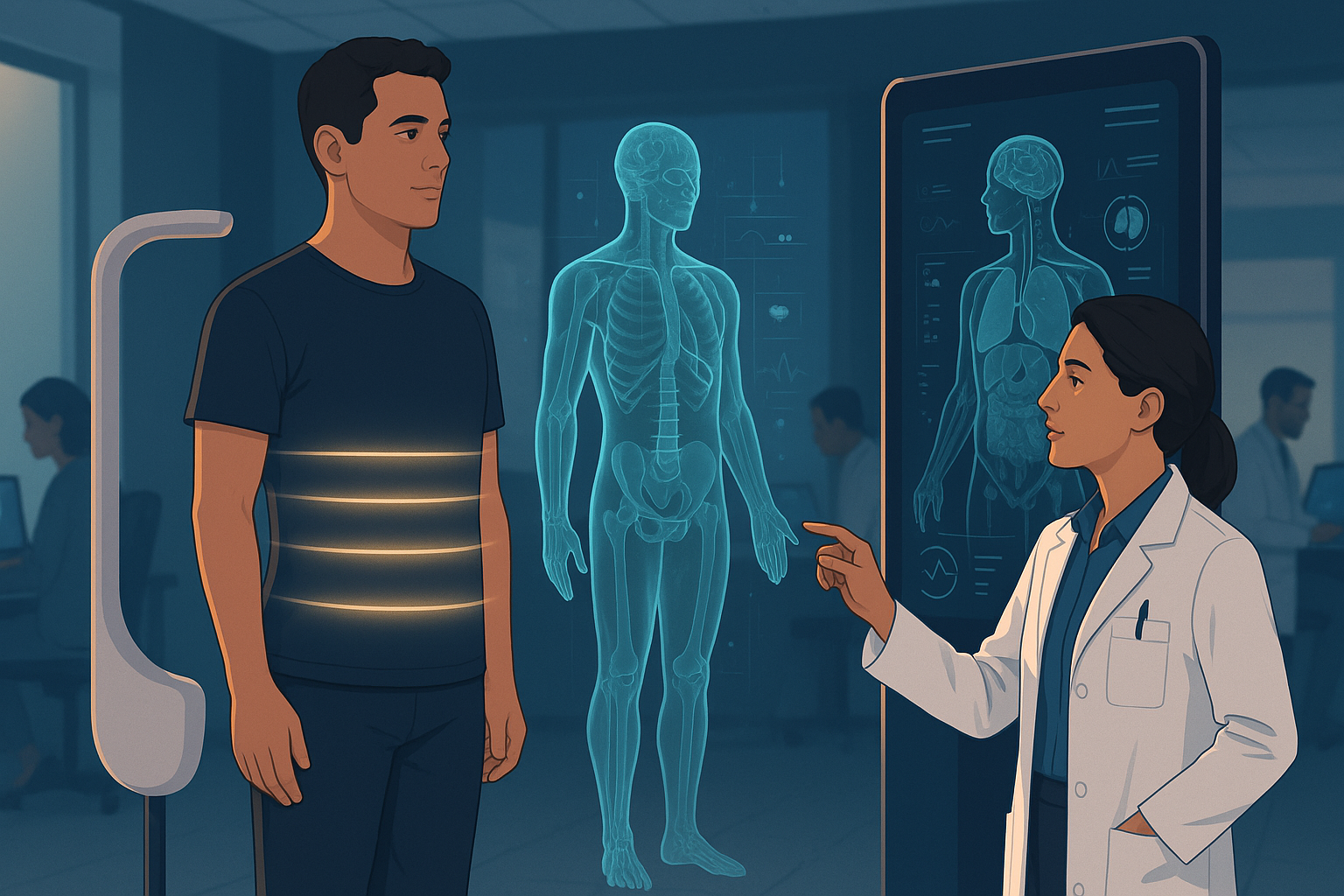
Midjourney Enters Healthcare: 60-Second Full-Body Ultrasound Scanner Generates 3D Body Maps, Exclusive Partnership with Butterfly Network

Midjourney Enters Healthcare: 60-Second Full-Body Ultrasound Scanner Generates 3D Body Maps, Exclusive Partnership with Butterfly Network

Midjourney forms Medical division, launching a 60-second full-body ultrasound scanner prototype in exclusive partnership with Butterfly Network, using 40 chip-level ultrasound modules to generate 3D body maps. Plans to open in San Francisco as a spa experience by late 2027, targeting 50,000 global deployments by 2031.

Oct 23, 20269

APAC AI Healthcare 2026 Panorama: Singapore's SGD 2.5B Investment, Japan's Care Robots Expand to 16 Categories, India's Phygital Model Solves Rural Healthcare

APAC AI healthcare entered a new phase in 2026, with Singapore's Ministry of Health committing SGD 2.5B over five years for AI-driven preventive care, Japan expanding AI care robot support to 16 categories to address aging, and India's phygital model combining AI decision support with local health workers to serve rural areas. A HIMSS report shows rising AI usage but lagging organizational readiness, with consumer expectations outpacing actual experience as a shared regional challenge.

Oct 22, 20269
Page 1 / 6Next