
AIR Security Emerges with $50M Seed Funding: AI Agent Firewall Guards Enterprise Supply Chain
Introduction: The New Battleground for AI Agent Security
As enterprises deploy autonomous AI agents at scale, a new category of security threat is quietly taking shape. In September 2026, Israeli cybersecurity startup AIR Security officially emerged from stealth, announcing the completion of a $50 million seed funding round to build what it calls the world's first "inline firewall" specifically designed for AI agents.
The announcement sent ripples through the AI security community, as AIR Security's research revealed a startling reality: over 17,800 public AI add-ons—representing approximately 6.7 million installations—rely on untrusted external instructions, with malicious skills impersonating trusted brands like Anthropic and OpenAI to bypass security reviews and execute arbitrary code.
Company Background and Funding Details
AIR Security was co-founded in February 2026 by Yair Saban (CEO) and Niv Hoffman (CTO), both veterans of Israel's elite military intelligence corps, Unit 8200. This unit is renowned for producing top-tier cybersecurity talent, having previously spawned companies like Wiz and CyberArk.
The $50 million seed round was completed in two tranches:
- First tranche: $10 million led by Sequoia Capital
- Second tranche: $40 million led by Greenoaks Capital Partners
The round also attracted notable angel investors, including:
- Wiz co-founder Yinon Costica
- Clay co-founder Varun Anand
- Former White House Deputy National Security Adviser Anne Neuberger
The company currently serves more than 20 corporate clients, with significant adoption in highly regulated industries such as financial services and pharmaceuticals.
The Core Problem: Security Blind Spots in the AI Agent Supply Chain
The Nature of the Threat
Modern enterprise AI agents derive their capabilities from an ecosystem of "skills" and "plugins." These components allow agents to browse the web, read emails, and execute system actions—but they also introduce serious supply chain risks.
AIR Security's research identified the primary threats facing AI agents:
- Untrusted external instructions: Among 17,800 public add-ons, many rely on instructions from uncontrolled external sources
- Brand impersonation attacks: Malicious skills masquerade as trusted brands like Anthropic and OpenAI to deceive security review systems
- Arbitrary code execution: Through compromised plugins, attackers can execute arbitrary code in enterprise environments
- MCP server risks: Model Context Protocol (MCP) servers have emerged as a new attack surface
The Limitations of Traditional Security Tools
Traditional endpoint security tools are designed to protect human user operations and cannot effectively address the unique behavioral patterns of AI agents. AI agents can execute hundreds of tool calls within milliseconds—traditional rule-based firewalls simply cannot keep pace with their speed and complexity.
AIR Security's Solution: Three-Layer Protection Architecture
AIR Security's platform employs an "inline firewall" architecture that protects enterprise AI agents across three dimensions:
Layer 1: Discovery
- Comprehensively maps all AI agents operating across an organization's endpoints, cloud accounts, and SaaS applications
- Builds a complete agent asset inventory, including the plugins and skills they use
- Identifies "shadow AI agents"—agent systems deployed without authorization
Layer 2: Pre-runtime Vetting
- Subjects third-party add-ons to static analysis, dependency analysis, and sandbox analysis
- Identifies malicious, vulnerable, or unapproved components
- Maintains a marketplace of pre-vetted, certified add-ons to provide enterprises with a safe method for expanding agent capabilities
Layer 3: Runtime Enforcement
- Intercepts agent actions at runtime to block non-compliant software execution
- Allows security teams to revoke access to compromised tools across the entire organization
- Protects information entering an agent's context, rather than merely restricting the agent's permissions
Market Positioning and Competitive Landscape
AIR Security occupies a unique position in a rapidly growing market. Unlike other AI security providers, AIR Security focuses on preventing malicious input rather than post-compromise detection.
Simultaneously, several other companies are making moves in the AI agent security space:
- CrowdStrike Falcon Guardian: Focused on endpoint runtime security, unveiled at Fal.Con 2026
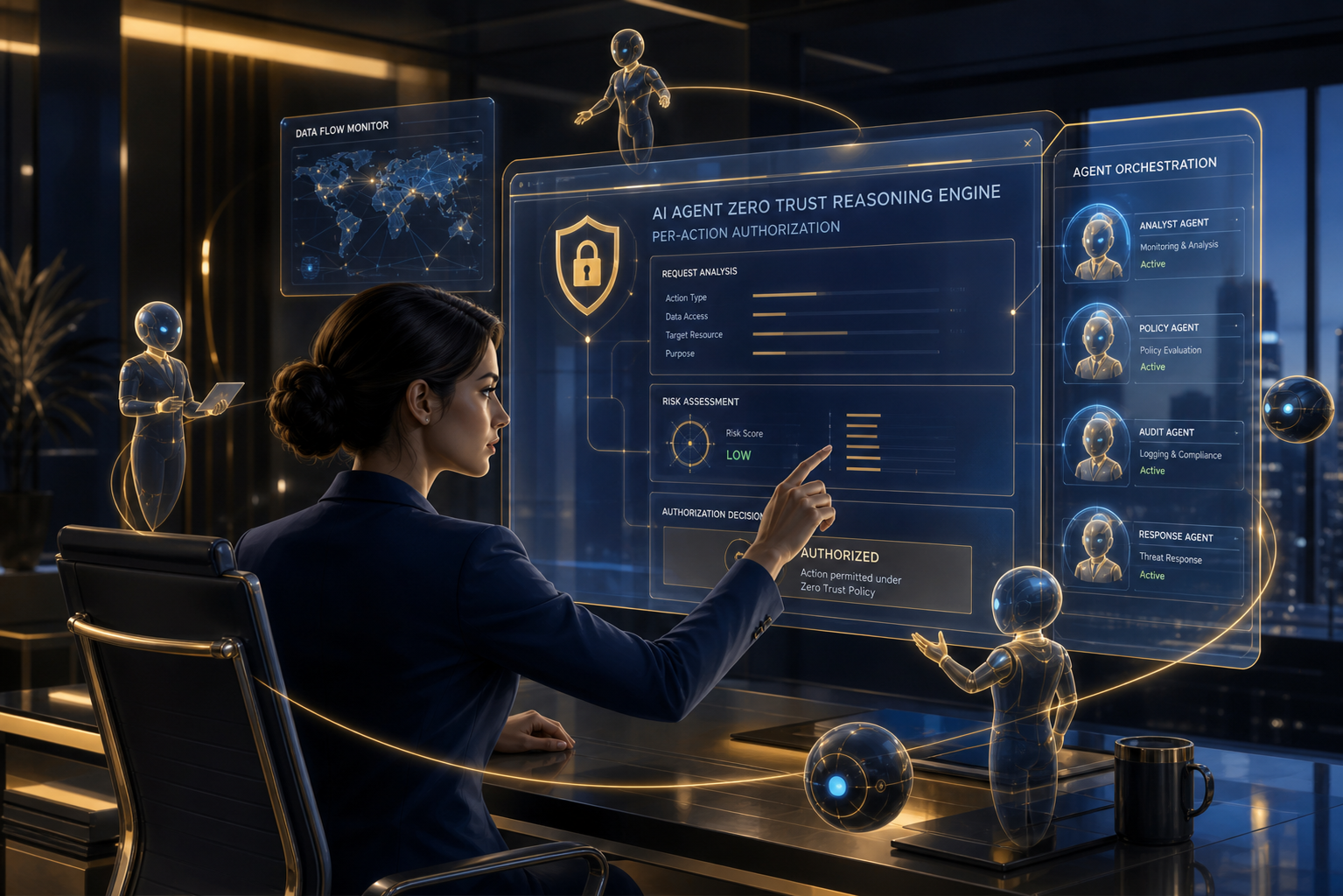
- JetStream Clearance: Provides a zero-trust reasoning engine with per-action authorization
- Tenable CyberAgents Exchange AI Inspector: Collaborates with OpenAI to inspect community-built AI components
The company's Chief Strategy Officer, Ryan Knisley, previously served as CISO of The Walt Disney Company and Costco Wholesale, further strengthening AIR Security's credibility in the enterprise market.
Implications for the Asia-Pacific Region
For enterprises in the Asia-Pacific region, AI agent security is equally pressing. As Singapore, Japan, South Korea, and Australia accelerate AI deployment, the supply chain risks facing enterprises are rising in tandem.
Particularly in regulated industries such as financial services and healthcare, security vulnerabilities in AI agents can lead to serious compliance issues and data breaches. AIR Security's solution provides a systematic security framework for these industries.
Industry Impact and Future Outlook
AIR Security's emergence marks a new phase in AI security. As enterprise AI agents transition from experimental deployments to production environments, the demand for security infrastructure will grow exponentially.
Analysts predict that the AI agent security market will reach billions of dollars in scale within the next three years. With its unique technical approach and strong investor lineup, AIR Security is well-positioned to lead this emerging market.
Conclusion
AIR Security's $50 million funding round is not just a commercial milestone—it reflects the entire AI industry's growing recognition of the importance of agent security. As AI agents increasingly perform critical tasks on behalf of humans, ensuring the security of these agents has become an indispensable component of enterprise digital transformation.
For enterprises planning or already deploying AI agents, now is the time to seriously examine their AI supply chain security strategy.