Microsoft Copilot Autopilot Officially Launches: Persistent Enterprise AI Agent Autonomously Manages Long-Running Tasks, Today Feature Enters Private Preview in October
Introduction: The Paradigm Shift from Reactive Assistant to Proactive Agent
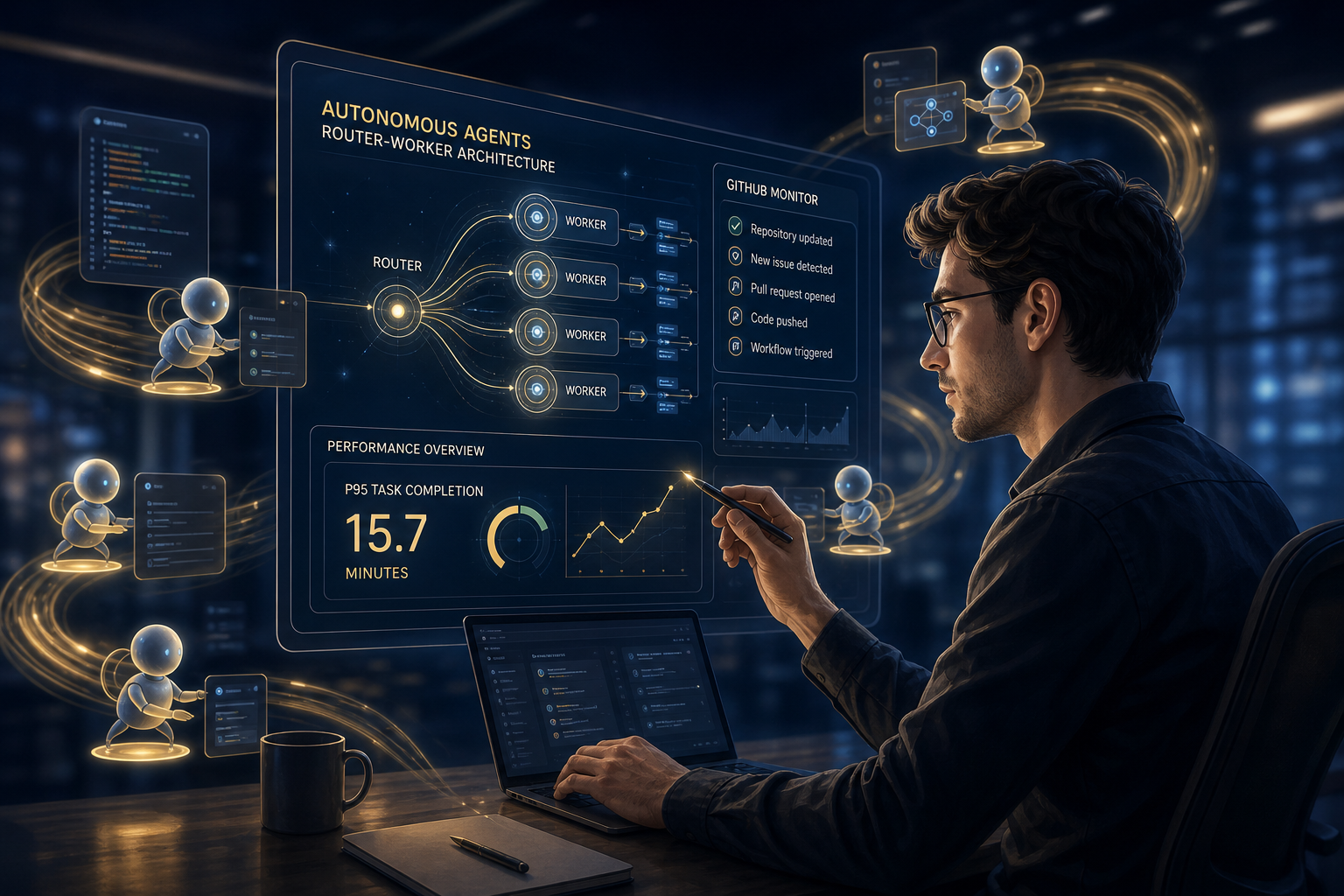
On September 25, 2026, Microsoft announced a major redesign of its Copilot platform, marking a fundamental transition in enterprise AI assistants from "reactive response" to "proactive agency." At the heart of this update is the new Autopilot feature—a persistent enterprise AI agent capable of autonomously executing complex business tasks spanning days or even weeks without requiring constant human prompting.
This development is particularly significant for Asia-Pacific enterprises. As the global AI agent market reached a record $102 billion in investment during Q3 2026, APAC businesses face unprecedented pressure for digital transformation. Microsoft Autopilot's launch provides these enterprises with a plug-and-play enterprise-grade AI agent solution.
Autopilot: The New Standard for Enterprise AI Agents
Core Architecture and Capabilities
Autopilot (formerly known as "Scout") is one of three pillars of Microsoft's new Copilot platform, alongside Home (unified chat and collaboration environment) and Code (natural language application development).
Key features of Autopilot include:
Independent Identity and Workspace Each Autopilot agent receives a unique identity through Microsoft Entra Agent ID, ensuring all agent activities are logged, permissioned, and associated with a human sponsor. This addresses the accountability concerns that enterprises most frequently raise when deploying AI agents.
Persistent Memory and Context Retention Unlike traditional single-conversation AI, Autopilot maintains contextual memory across long-running tasks. For example, when an agent manages a three-month supplier review process, it remembers all previous communications, decisions, and pending items without requiring users to repeatedly provide background information.
Proactive Monitoring and Execution Autopilot can proactively monitor Teams channels, follow up on email threads, and manage recurring projects without human intervention. Specific use cases include:
- Building schedules and workback plans for supplier reviews
- Proactively reaching out to stakeholders and managing follow-up meetings
- Monitoring project progress and alerting when deviations occur
- Automatically generating status reports and summaries
Secure Sandbox Environment Autopilot operates within "Copilot Managed Runtime," a secure sandboxed environment that allows agents to execute code and tasks within a company's tenant under IT governance, ensuring enterprise data security.
Deep Integration with Microsoft 365 Ecosystem
Autopilot can be invoked by employees via @mention in Teams, Outlook, and other Microsoft 365 surfaces. This seamless integration means enterprises can embed AI agent capabilities into daily business operations without changing existing workflows.
Today Feature: Proactive Daily Work Management
Feature Overview
Today is another important feature of Microsoft's new Copilot platform, scheduled to enter private preview in October 2026. Today functions as a proactive, personalized command center that aggregates information from:
- Email: Identifying messages requiring immediate response and forgotten follow-ups
- Calendar: Analyzing upcoming meetings and preparing relevant materials
- Teams Threads: Tracking important discussions and identifying items requiring user attention
- Task Lists: Prioritizing to-dos and suggesting optimal execution sequences
Beyond Information Aggregation
Today's unique value lies in its ability to prepare actionable outputs rather than merely surfacing information:
- Draft Replies: Preparing drafts for emails requiring responses, ready for user review and editing
- Schedule Adjustment Suggestions: Identifying scheduling conflicts and proposing solutions
- Context-Aware Follow-ups: Generating personalized follow-up messages based on conversation history
Enterprise AI Cost Governance: FinOps for AI
Usage-Based Billing and Budget Management
Microsoft placed particular emphasis on enterprise AI cost governance in this update. With the launch of long-running agents like Autopilot, Cowork, and Code, enterprises need new tools to manage AI usage costs.
Microsoft expanded its cost management tools to cover usage-based billing (UBB) for these agents. Administrators can:
- Set spending policies and budget caps
- Manage credit requests and allocations
- Control which model families different agents can access
- Monitor agent activity through the Microsoft 365 admin center
This complements Microsoft's previously launched Copilot Credits system, providing enterprises with a complete AI cost governance framework.
Multi-Model Support
The Copilot platform continues to integrate diverse frontier models, including OpenAI's GPT-6 Sol and Anthropic's Claude Opus 5.5, to support varying levels of complexity in agentic tasks. This multi-model strategy ensures enterprises can select the most appropriate model for specific task requirements, balancing performance and cost.
Opportunities and Challenges for Asia-Pacific Enterprises
Adoption Trends
For Asia-Pacific enterprises, Microsoft Autopilot's launch presents significant opportunities. Market research indicates APAC enterprises are accelerating AI agent adoption, particularly in:
Financial Services: Automating compliance reporting, customer service follow-ups, and risk monitoring Manufacturing: Supply chain management, supplier communications, and quality control documentation Retail: Inventory management, customer relationship maintenance, and promotional campaign coordination
Governance and Compliance Considerations
Asia-Pacific enterprises deploying AI agents must pay particular attention to data sovereignty and privacy regulations. Microsoft's Entra Agent ID system and Copilot Managed Runtime provide enterprise-grade security, but specific compliance requirements in each region still require individual assessment.
For example, enterprises operating in mainland China must ensure AI agent data processing complies with the Personal Information Protection Law (PIPL); those in Japan must adhere to the Act on the Protection of Personal Information (APPI).
Competitive Landscape Analysis
Microsoft Autopilot's launch puts it in direct competition with:
| Platform | Agent Name | Key Features |
|---|---|---|
| Microsoft | Autopilot | Persistent, enterprise identity management, Microsoft 365 integration |
| OpenAI | Dots | Always-on, connects 4,000+ apps, GPT-6 Astra powered |
| Salesforce | Hunter | CRM integration, sales workflow automation |
| Gemini Agent for Work | Multi-model orchestration, enterprise data integration |
Microsoft's core competitive advantage lies in its massive enterprise customer base and deep Microsoft 365 ecosystem integration. For enterprises already using Teams, Outlook, and SharePoint, Autopilot offers the lowest-friction path to AI agent adoption.
Future Outlook
Microsoft plans to expand support for agents built in Copilot Studio in October 2026, allowing enterprises to create custom agents and incorporate them into FinOps and hosting frameworks. This will further lower the technical barrier for enterprises to build and deploy customized AI agents.
As the Today feature enters private preview and Autopilot deploys across more enterprises, Q4 2026 will be a critical period for enterprise AI agents transitioning from proof-of-concept to large-scale production deployment.
Conclusion
Microsoft Copilot Autopilot's launch represents an important milestone in enterprise AI assistant development. By providing persistent, identity-bearing, memory-equipped AI agents, Microsoft is redefining the possibilities for enterprise workflow automation. For Asia-Pacific enterprises, this represents both an opportunity to enhance competitiveness and a challenge requiring careful evaluation of governance and compliance risks.
In the age of AI agents, successful enterprises will be those that can effectively integrate human judgment with AI autonomy—and Microsoft Autopilot is designed precisely for this purpose.