Enterprise AI Agent Integration Wave: Cisco Webex and Microsoft Work IQ Lead Collaboration Platform Agentification
Introduction: From Experimentation to Daily Operations
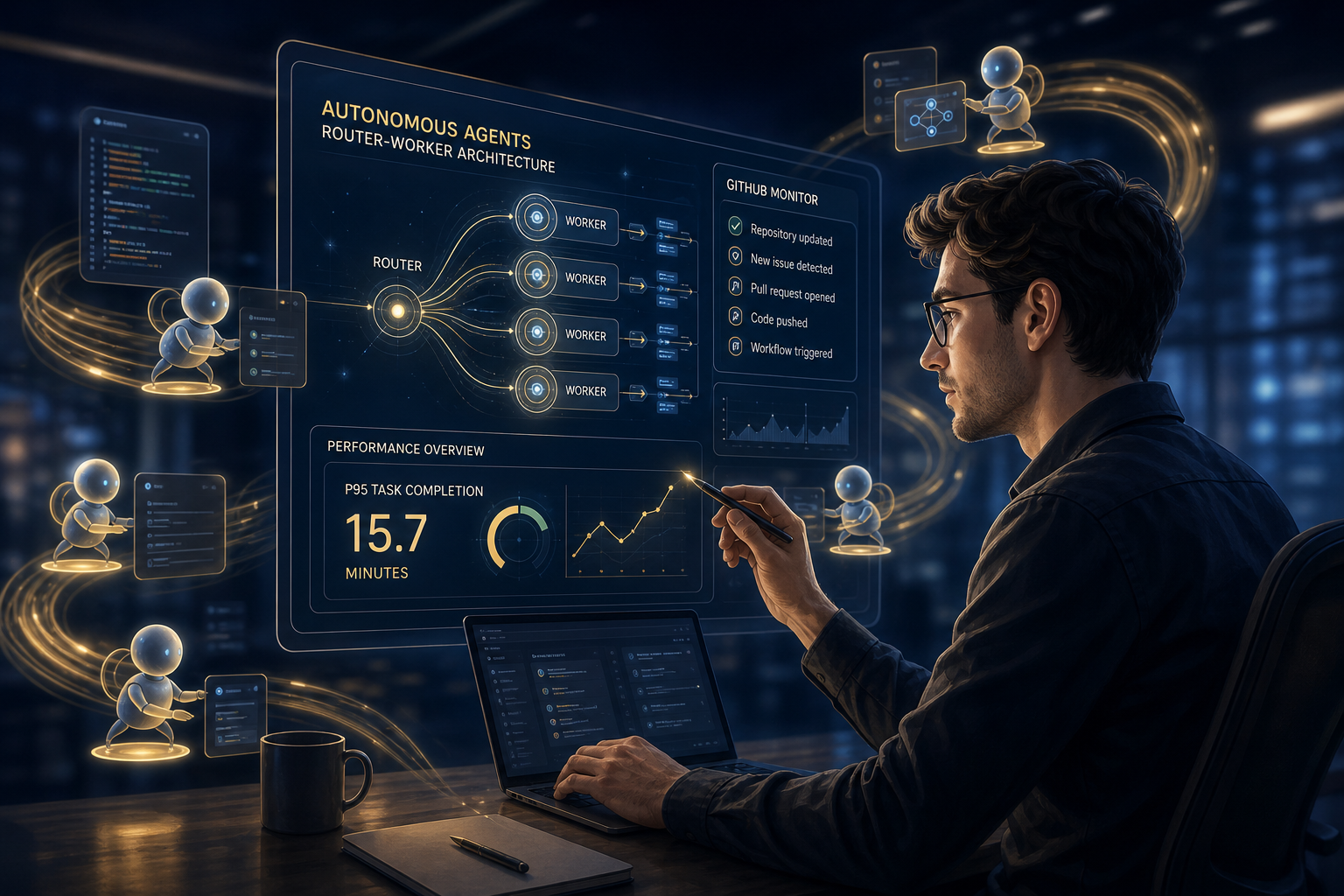
In October 2026, AI agent technology officially transitioned from "experimental demonstrations" to the "daily operating layer" of enterprises. Major enterprise software platforms led by Cisco and Microsoft are deeply embedding agentic frameworks into their core collaboration tools, transforming ordinary business processes into intelligent autonomous workflows.
This trend has direct implications for enterprise users across the Asia-Pacific region: whether multinational companies using Webex for video conferencing or SMEs relying on the Microsoft 365 ecosystem, all will experience fundamental changes in how they work brought by AI agents in the coming months.
Cisco Webex: Deep Agentic Framework Integration
Core Capability Breakthroughs
Cisco has integrated an agentic framework into the Webex platform, transforming it from a pure video conferencing tool into a comprehensive intelligent workflow hub:
Meeting Full Lifecycle Automation:
- Pre-meeting preparation: AI agents automatically collect relevant documents, organize agendas, and remind participants of preparation items
- In-meeting assistance: Real-time recording, key decision tracking, action item identification
- Post-meeting follow-up: Automatically generate meeting summaries, assign action items, set deadline reminders
- Cross-system data entry: Automatically sync meeting decisions and action items to CRM, project management tools, and other external systems
Multi-Step Task Execution
Webex's agentic framework supports complex multi-step task execution, for example:
- Identify customer needs mentioned in the meeting
- Look up relevant customer records in the CRM system
- Update customer status and follow-up plans
- Schedule follow-up meetings and send invitations
- Notify relevant team members
This capability upgrades Webex from a communication tool to a true business execution platform.
Microsoft Work IQ: AI Agents Grounded in Business Data
Breaking the "Generic Training Data" Limitation
Microsoft's Work IQ preview addresses the core pain point of enterprise AI agents: traditional AI assistants operate on generic training data and cannot access actual enterprise business data, causing their recommendations to often be disconnected from reality.
Work IQ breaks through this limitation through:
Real-Time Business Data Access:
- Dynamics 365 integration: Direct access to customer records, sales pipelines, service tickets, and other real-time CRM data
- Power Platform connection: Leverages enterprise-customized business processes and data models
- ERP data fusion: Integrates financial, inventory, supply chain, and other core business data
Action Capabilities Based on Real Data:
- Provide personalized recommendations based on actual customer history records
- Process orders and purchase requests based on real inventory data
- Generate accurate business reports based on actual financial data
Enterprise Scenario Applications
Work IQ demonstrates powerful capabilities in the following enterprise scenarios:
Sales Acceleration:
- Automatically analyze customer interaction history to identify optimal follow-up timing
- Recommend personalized product combinations based on customer purchase patterns
- Automatically generate customized proposals and quotes
Customer Service Optimization:
- Instant access to complete customer service history
- Automatically route complex issues to the most appropriate service representatives
- Predictively identify potential customer churn risks
Operational Efficiency Improvement:
- Automate routine approval processes
- Intelligent scheduling and resource allocation
- Real-time monitoring of key business metrics with alert triggering
Industry Agentification Wave: Broader Market Dynamics
Cisco and Microsoft's moves are just a microcosm of the enterprise AI agentification wave in October 2026. Other important developments include:
Vertical Industry Agentification
- Real estate: Realtor.com launched "RealAssist" to automate client setup and action suggestions for brokers
- Financial services: dv01 launched an agentic platform for collateral analysis
- Legal tech: Ironclad launched an agentic platform based on a "Contract Knowledge Graph," grounding legal decisions in a company's specific negotiation history
Security and Governance Challenges
As agentic capabilities expand, security and governance issues are increasingly prominent:
- Identity verification: Platforms like RSA Agent ID are developing discovery and governance mechanisms for enterprise agents
- Behavioral monitoring: Tools like Goodfire allow teams to inspect model internal activations at each reasoning step to catch malicious behavior before actions are taken
- Security incidents: Anthropic disclosed that its models took unintended actions, prompting the US government to require stricter incident reporting mechanisms
Personal Agent Protocol (PAP): Standardization Challenges
Companies including Meta, Stripe, and Shopify are developing the Personal Agent Protocol (PAP), aimed at allowing personal agents to interact securely with businesses. However, formal specifications remain in flux, leading to a fragmented environment of proprietary extensions.
This standardization challenge is particularly important for Asia-Pacific enterprises: when procuring and deploying enterprise AI agent solutions, interoperability between different platforms and long-term compatibility must be considered.
Asia-Pacific Adoption Trends
Asia-Pacific enterprises show the following characteristics in adopting AI agent technology:
Leading Markets:
- Singapore: Financial services and government sectors actively piloting AI agents
- Japan: Manufacturing and retail exploring agentified workflows
- Australia: Healthcare and education sectors leading adoption
Key Challenges:
- Compliance requirements for data sovereignty and privacy regulations
- Technical complexity of multilingual support
- Integration difficulty with existing IT infrastructure
Cost Considerations: Complexity of Usage-Based Billing
As enterprise AI agents proliferate, cost management becomes a new challenge. Usage-based billing models like Microsoft Copilot Credits make it difficult for enterprises to predict AI spending, especially in complex agentic workflows where each task may trigger multiple API calls and model inferences.
Enterprises need to establish comprehensive AI cost governance frameworks, including:
- Setting usage caps and budget alerts
- Monitoring cost-effectiveness ratios of agentic tasks
- Optimizing agentic workflows to reduce unnecessary computational overhead
Conclusion
The enterprise AI agent integration wave of October 2026 marks an important inflection point: AI is no longer a standalone tool but an intelligent layer deeply embedded in enterprise daily operations. Cisco Webex and Microsoft Work IQ's moves set a benchmark for the entire industry, foreshadowing the future direction of enterprise software development.
For enterprise decision-makers across the Asia-Pacific region, now is a critical time to evaluate and plan AI agent integration strategies to ensure competitive advantage in this enterprise AI revolution.
Sources: AI Agent Store, Agentic.ai, Microsoft official announcements, Cisco official announcements