
AI Agents Evolve into 'Digital Employees': Kognitos Launches 61 Finance AI Workers, Hyro Care OnCue Covers 2,500 Healthcare Sites
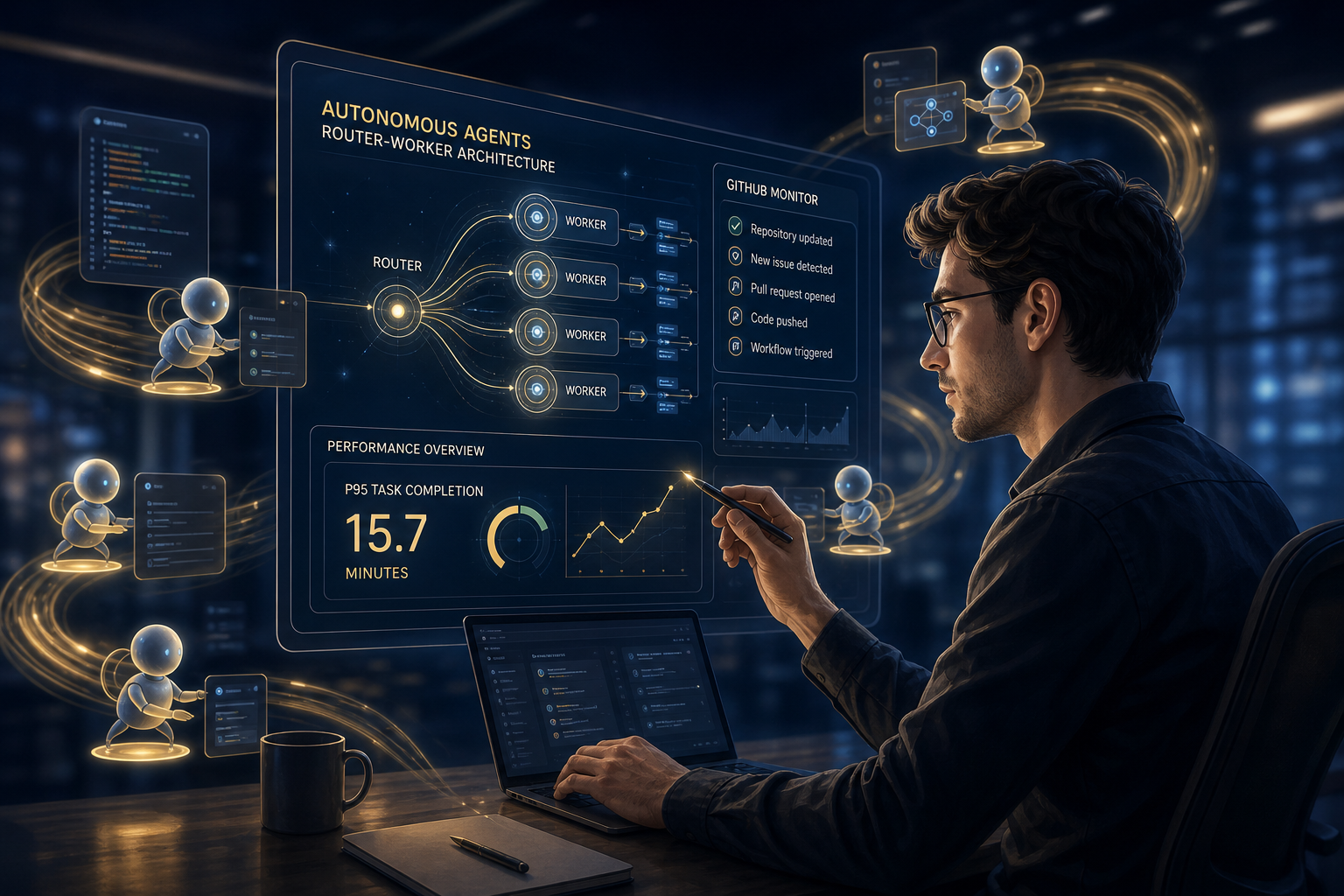
October 2026 marks a pivotal milestone in AI agent technology — the transition from experimental assistants to accountable digital employees that can be directly "onboarded" into organizations. Two landmark launches this week crystallize this shift: Kognitos unveiled 61 finance AI employees on October 21, while Hyro rebranded around "Care OnCue™," extending agentic AI coverage to 2,500 healthcare facilities worldwide.
Kognitos: 61 Finance AI Employees Ready to Hire
The Paradigm Shift from Agent to Employee
San Francisco-based AI automation company Kognitos announced its "AI Employees" suite on October 21, 2026 — a move that represents not just a product update, but a fundamental shift in how the industry conceptualizes AI agents. Traditional AI agents are designed as tools; Kognitos AI Employees are designed as accountable workers — with job descriptions, operational boundaries, and auditable action logs.
61 Roles, 515 Standard Operating Procedures
The AI Employees suite includes 61 ready-to-hire roles covering core finance and banking functions:
| Role Category | Representative Positions |
|---|---|
| Accounts Payable | AP Specialist |
| Reconciliation | Reconciliation Accountant |
| Cash Management | Cash Application Specialist |
| Month-End Close | Close Manager |
| Compliance | KYC & Onboarding Analyst |
Each role is backed by a library of 515 Standard Operating Procedures (SOPs). These SOPs are compiled using Kognitos's proprietary "English-as-Code" engine, ensuring identical execution every time — precisely the deterministic behavior financial audits demand.
Quill: The SOP-Drafting AI Agent
To lower the barrier to SOP creation, Kognitos simultaneously launched "Quill" — an AI agent that analyzes a team's systems and recent transactions to automatically draft new SOPs in plain English for human approval. Once approved, SOPs go directly into production. This design addresses the "last mile" problem of enterprise AI deployment: how to translate institutional knowledge into executable agent instructions.
Context Graphs: Financial Knowledge Graphs
The launch also expanded Context Graph capabilities, connecting financial records (vendors, bills, payments) with business relationships and employee knowledge into a unified graph. 133 ready-made finance monitors allow enterprises to establish continuous controls — such as duplicate invoice detection — with a single click. The platform now supports REST and MCP access, enabling customers to integrate their own AI agents into the system.
Solving the Enterprise AI "Proof Problem"
Kognitos positions this launch as solving the enterprise AI "proof problem" — the difficulty leaders face in transitioning pilot agents into production due to concerns over reliability and auditability. By requiring agents to operate within defined SOP frameworks and providing English-format action logs, Kognitos enables financial institutions to increase capacity without necessarily increasing headcount.
Hyro Care OnCue™: The New Standard for Healthcare Agentic AI
The Strategic Transformation Behind the Rebrand
Also on October 21, healthcare AI communications company Hyro announced its rebrand around "Care OnCue™" — a name that is itself a declaration: moving from traditional queue-based waiting to AI agent-driven proactive response. The "cue" in Care OnCue signals a shift from patients waiting in queues to agents responding on cue.
Scale: 2,500 Sites, 300 Million Interactions
As of October 2026, Hyro's platform metrics are impressive:
- Sites covered: 2,500 hospitals, clinics, and healthcare facilities
- Enterprise deployments: Over 50 large health systems
- Cumulative interactions: Over 300 million patient interactions
This scale positions Hyro as a critical infrastructure provider in the healthcare agentic AI space.
The Agentic Communication Engine (ACE™)
Hyro's technical core is the "Agentic Communication Engine (ACE™)," combining knowledge graphs with both Large Language Models (LLMs) and Small Language Models (SLMs) to ensure healthcare-grade output reliability. The platform deeply integrates with major Electronic Health Record (EHR) systems:
- Epic (featured in Epic's AI Agent Showroom)
- Oracle Health
- athenahealth
As well as CCaaS providers including Five9, Cisco, and Genesys.
From Patient Access to Full Workflow Coverage
Care OnCue™ agent capabilities have expanded from patient access to deeper workflows:
- Patient Access: Appointment scheduling, routing, prescription refills
- IT Service Management: Hospital internal IT help desk automation
- Revenue Cycle Management: Billing inquiries, insurance verification
- Clinical Support: Clinical protocol navigation
Care Intelligence: The Continuous Sensing Layer
Launched in June 2026, the Care Intelligence analytics layer acts as a "continuous sensor," transforming interaction data into operational insights. It tracks KPIs including appointment automation rates, resolution times, and call deflection rates, while surfacing bottlenecks in patient journeys.
Implications for Asia-Pacific Healthcare
Hyro's model holds significant reference value for Asia-Pacific healthcare systems. Healthcare institutions in Singapore, Japan, and Australia face mounting service pressure from aging populations. Agentic AI covering the full patient access workflow could significantly improve healthcare accessibility without proportionally increasing labor costs.
Industry Trend: The "Employeeification" of Agentic AI
The Kognitos and Hyro cases together reveal the core trend in agentic AI for 2026:
1. Identity Shift from Tool to Employee
AI agents are no longer viewed as tools but as digital employees with responsibilities, boundaries, and accountability mechanisms. This shift requires enterprises to build entirely new "AI human resources" management frameworks.
2. SOP-Driven Deterministic Execution
High-compliance industries like finance and healthcare require AI agent execution to be predictable and auditable every time. SOP-driven deterministic execution is becoming the standard architecture for enterprise-grade agentic AI.
3. Deep System Integration
Whether Kognitos's MCP access or Hyro's EHR integration, successful agentic AI deployments depend on deep integration with existing enterprise systems rather than operating in isolation.
4. Trust Building Through Scale
Hyro's 300 million interaction record and Kognitos's 515-SOP library represent concrete ways enterprises build trust in AI agents — through scaled success cases rather than abstract technical promises.
Conclusion
In October 2026, AI agents have officially crossed the boundary between "tool" and "employee." Kognitos's 61 finance AI employees and Hyro's Care OnCue™ represent the same evolutionary direction across two very different industries: AI agents are no longer tools that assist humans, but digital workers that can independently bear responsibilities, accept audits, and integrate into organizational structures. For enterprise leaders, this means AI governance frameworks need to upgrade from "tool management" to "employee management" — including responsibility definition, boundary setting, performance tracking, and accountability mechanisms.