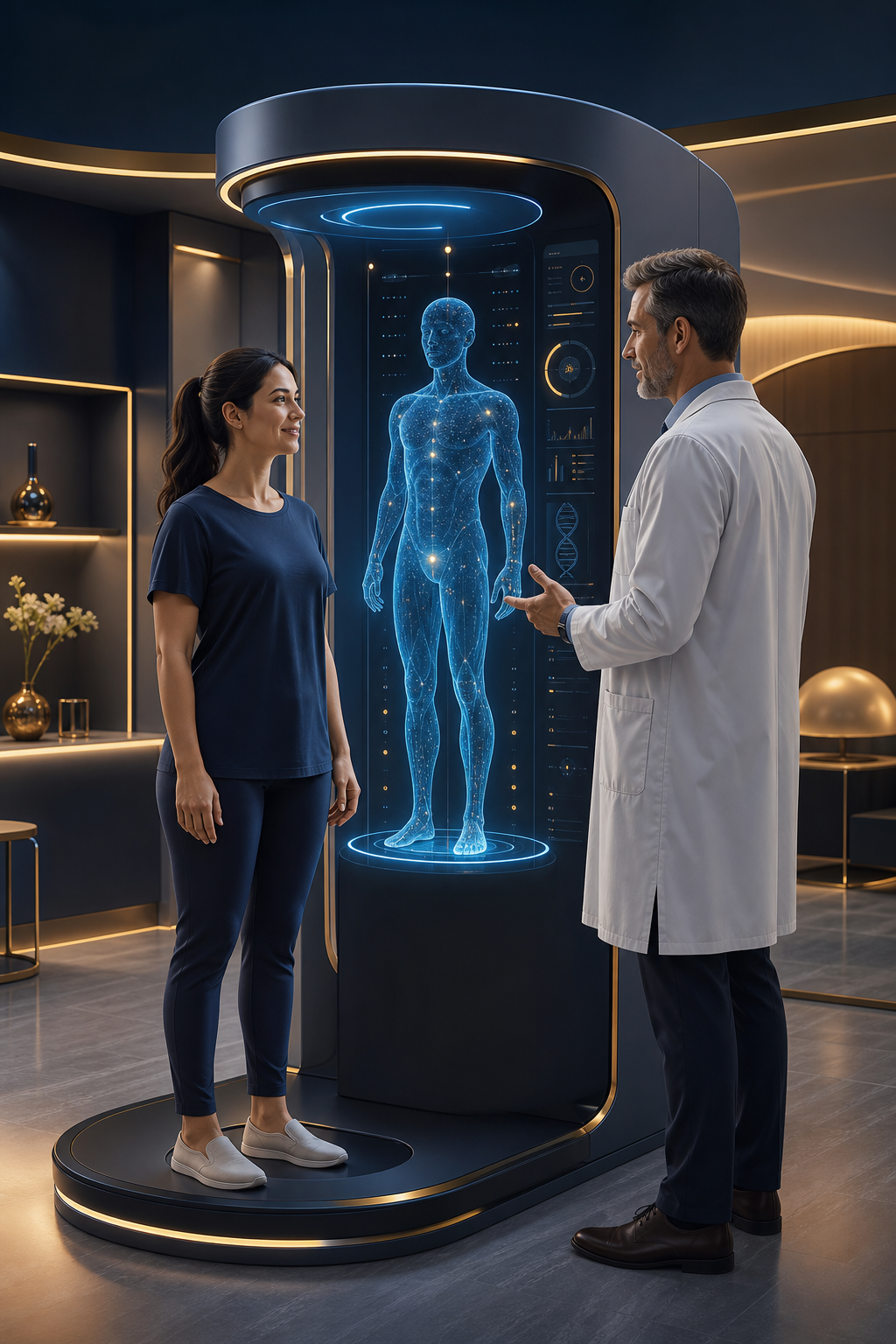

Ambient AI Scribing Revolution: Reshaping the New Standard for Clinical Workflows
Introduction: From Experiment to Standard Infrastructure
By October 2026, ambient AI scribing technology has completed a fundamental transformation from "experimental pilot" to "standard clinical infrastructure." In major health systems worldwide, AI that automatically captures and transcribes patient-clinician conversations to generate structured clinical notes has become a core tool as essential as electronic health record (EHR) systems themselves.
Behind this transformation lies substantial rigorous clinical research data. From multi-center studies across five US academic medical centers to Spain's Quirónsalud network's large-scale deployment of 2.3 million encounters, the clinical value of ambient AI scribing has been thoroughly validated.
Core Research Data: Quantifying Clinical Impact
Documentation Time Reduction: 16 Minutes Saved Per Encounter
A multi-center study across five US academic medical centers (published in Nature Digital Medicine) demonstrates significant time savings from ambient AI scribing tools:
- Total EHR time: Reduced by 13.4 minutes per encounter
- Documentation time: Reduced by 16.0 minutes per encounter
- "Pajama time" (completing documentation at home after hours): Significantly reduced
Mass General Brigham data shows a median time savings of 5.6 minutes per appointment. While data varies across institutions, all studies show consistent positive trends.
Large-Scale Deployment Validation: 2.3 Million Encounters
Spain's Quirónsalud network's large-scale deployment provides the most compelling real-world data to date:
- Deployment scale: 2.3 million outpatient encounters
- Adoption rate: Approximately 31% in some networks
- Semantic agreement: Stable at 87.4-89.2% between AI-generated drafts and clinician-validated notes
- Consistency stability: Maintained high stability throughout the deployment period without significant decline
87-89% semantic agreement means AI-generated clinical notes accurately reflect the core content of patient-clinician conversations in the vast majority of cases, requiring only minor physician edits to complete final records.
Clinician Burnout: The Most Consistent Improvement Metric
Among all research metrics, improvement in clinician burnout is the most consistent and significant finding. Multiple health systems including Emory Healthcare, Mass General Brigham, and Intermountain Health all report:
- Significantly reduced documentation-related stress
- Improved job satisfaction
- Clinicians able to close charts during the workday without after-hours work
- Improved eye contact and active listening with patients
Technical Implementation: Deep EHR Integration
Native Integration with Epic Systems
A major milestone for ambient AI scribing in 2026 is deep integration with mainstream EHR systems like Epic. This native integration eliminates the integration friction associated with standalone vendor deployments, allowing clinicians to use AI scribing directly within familiar work interfaces without switching applications or learning new systems.
In many large health systems, activating ambient AI features requires only simple setup within existing clinical interfaces, dramatically lowering adoption barriers.
Workflow Design: The Importance of Human Review
Current best practices require physicians to review and edit AI-generated drafts before they are permanently recorded in the EHR. This "human-in-the-loop" design ensures:
- Final quality control for clinical accuracy
- Physician legal responsibility for record content
- Timely identification and correction of AI errors
Duke University's "SCRIBE" framework aims to standardize evaluation methods for ambient AI tools, combining human clinical review with technical metrics like semantic agreement, providing the industry with unified quality assessment standards.
Clinical Quality and Patient Experience
Improved Patient Experience
When clinicians no longer need to divide attention between patients and keyboards, patient experience improves significantly:
- Patients feel more genuinely listened to
- Clinicians maintain more eye contact
- Consultation quality improves, patient satisfaction increases
- Patient-clinician relationships become more humanized
This improvement is particularly important for Asia-Pacific, where many cultures highly value personal relationships and trust between patients and physicians.
Challenges in High-Acuity Settings
While ambient AI scribing has achieved significant success in outpatient settings, application in high-acuity environments (emergency departments, ICUs, operating theaters) still faces technical challenges:
- Background noise: High-noise environments in emergency rooms and operating theaters affect speech recognition accuracy
- Multi-party conversations: Need to simultaneously capture conversations among multiple healthcare providers
- Real-time requirements: Some clinical decisions require immediate documentation
Researchers are actively developing specialized solutions for these high-acuity environments.
Evolution of Regulatory and Evaluation Frameworks
FDA Framework Updates
The US FDA continues updating its AI medical device framework to support safe deployment while navigating the complexities of autonomous systems. A key concern in 2026: only a small percentage of FDA-authorized AI medical devices are supported by randomized controlled trial data, prompting calls for more rigorous evidence-based standards.
Stanford-Harvard ARISE Network Report
The Stanford-Harvard ARISE network's State of Clinical AI (2026) report notes that while AI models often perform well on narrow, exam-style benchmarks, performance can degrade in the complex, uncertain environments of everyday clinical practice. Consequently, there is growing emphasis on testing AI in simulated clinical workflows rather than relying solely on static dataset evaluations.
Asia-Pacific Adoption Status and Opportunities
Special Challenges for APAC Healthcare Systems
Asia-Pacific faces some unique challenges in adopting ambient AI scribing:
Language Diversity: Asia-Pacific has numerous languages including Mandarin, Cantonese, Japanese, Korean, Hindi, and others, with significant variation in speech recognition accuracy across languages. Most commercial solutions are primarily optimized for English, with room for improvement in APAC language support.
Healthcare System Variation: APAC healthcare systems vary enormously, from Japan's highly digitized systems to infrastructure limitations in parts of Southeast Asia, requiring deployment strategies tailored to local conditions.
Data Privacy Regulations: Different countries have different medical data privacy protection requirements, necessitating compliance with local regulations for AI scribing systems.
Opportunity: Addressing Physician Shortages
Many APAC countries face physician shortages. By reducing documentation burden, ambient AI scribing technology can enable existing physicians to serve more patients, effectively alleviating healthcare resource constraints. Researchers are exploring how to deploy ambient AI in resource-constrained settings to address workforce shortages.
Future Development Directions
Breakthroughs in High-Acuity Settings
Researchers are actively developing ambient AI solutions for emergency departments, ICUs, and operating theaters, with significant breakthroughs expected in 2027.
Integration with Agentic AI
As agentic AI technology matures, future ambient AI systems will not only record conversations but proactively provide clinical decision support, identify potential drug interactions, and alert for preventive care measures — becoming true "clinical intelligence assistants."
Establishing Decentralized Standards
The industry is exploring the establishment of decentralized clinician credentialing and data interoperability standards to ensure safer, more equitable AI-assisted care.
Conclusion
The rapid proliferation of ambient AI scribing technology in 2026 represents an important milestone in healthcare AI moving from "proof of concept" to "clinical standard." The large-scale validation data of 2.3 million encounters, 16-minute documentation time savings, and significant reduction in clinician burnout collectively form a strong clinical evidence base for this technology.
For healthcare institutions across Asia-Pacific, now is the optimal time to seriously evaluate and deploy ambient AI scribing technology. While language diversity and system integration remain challenges, rapid technological advancement is progressively addressing these issues.
Sources: Nature Digital Medicine, AHA, Mass General Brigham, Frontiers in Digital Health, Stanford Medicine